
For last two months, much of the discussion, a large part of due diligence, agreement negotiations, etc, have happened remotely.

Richest Indian Mukesh Ambani on Tuesday mentioned about leadership transition at his energy-to-retail conglomerate, saying he wants the process to be accelerated with seniors, including him, yielding to the younger generation. Ambani, 64, who has previously not spoken about succession plans at the country's most valuable company, said Reliance is "now in the process of effecting a momentous leadership transition." Ambani has three children -- twins Akash and Isha, and Anant.

From a modest two-bedroom apartment in Koramangala, the Bengaluru-headquarted company now has multiple offices across the country.

Ramping up e-commerce operations and going beyond its current strongholds are key challenges for the grocery chain in its battle with Mukesh Ambani's retail behemoth.

The industry is expected to spend an additional $500- 1,000 million during the same period on logistics functions.

Mark Zuckerberg, founder and CEO of Meta, summed it up well as he explained the reason for the company sacking 13 per cent of its employees. He said no one predicted that the boom for digital services during the Covid pandemic would die out. "Many people predicted this would be a permanent acceleration that would continue even after the pandemic ended.

As it readies for its initial public offering (IPO) later this year, digital payments firm Paytm is honing its strengths to remodel itself from being a payment wallet to becoming a financial services provider, and is working towards narrowing its losses, evident from its most recent Annual Report. Unlike many of its peers, Paytm has started expanding its merchant payment ecosystem. It has realised that though it can take the maximum share of the Unified Payment Interface (UPI) transactions, from a revenue generation point of view it will not have any impact.

The Q3 office rebound growth was led by Bengaluru and Hyderabad, which together accounted for nearly 80 per cent of the net absorption in Q3.

The company expects Bournvita Crunchy to strengthen its presence in the cookie segment.

Reliance Industries Ltd on Friday reported a 7 per cent drop in its June quarter net profit as retail business got hit by the second wave of COVID infections.
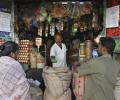
Everyday consumerables, such as grocery and order-in food items are the key buyout sector, analysts say, and a major reason for kirana stores' digitisation push.

His investment in Paytm is in his personal capacity.

Firm has shortlisted 4 candidates for engineering head post

While e-commerce sites rush to meet mass demand, Etsy is positioning itself more as a community of artisans where buyers can seek uncommon and unique products rather than mass-produced discounted products.

Fifty-nine per cent of reserved tickets on Indian Railways are now booked online.

Ajit Balakrishnan on keeping an eye on democratising finance in India.
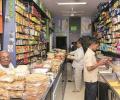
'90 per cent of the food and grocery business is still with the kiranas.' 'If kiranas are not allowed to operate, it becomes a serious issue.'

'For our traditional membership base, it would be an access to disruptive ideas,' FICCI President Subhrakant Panda tells Asit Mishra/Business Standard.

The industry is looking at a promising 2016, though experts and even the investors anticipate correction on the valuation side

Amazon Fashion flaunts its triple digit month-on-month growth, races ahead of competitors Flipkart, Jabong and Myntra.

Ajit Balakrishnan offers a New Year resolution for our policy-makers.

Ajit Balakrishnan on how to arrest a worldwide decline.

What sold the most this year? Beauty, toys and baby care, sports and fitness, television and large appliances, followed by fashion, says T E Narasimhan.

In spite of a severe second wave of the coronavirus pandemic, and a widespread disruption in public life therefore, India's fast-moving consumer goods (FMGC) sector seems to have emerged as one of the most resilient segments of the economy. The early numbers and estimates for the April-June quarter indicate a steady recovery in FMCG players' business, which is now set to exceed the pre-pandemic level. Amid nationwide lockdowns because of the first Covid wave, FMCG revenues had been severely affected in mid-2020.

Titan will become the latest Indian brand to ride on the back of the global e-retail major

Unacademy may see a funding dry spell for at least next 12-18 months and even last till 24 months and will cut costs to weather the lean period, said the chief executive of the education technology unicorn that recently laid off more than 600 employees. "This is a test for all of us. We must learn to work under constraints and focus on profitability at all costs. We must survive the winter," said Unacademy's co-founder and CEO Gaurav Munjal in a letter to the employees. "Winter is here. We are looking at a time when the funding will dry up for at least 12-18 months.

Television as a category would see a lower rate of growth at 8% vis-a-vis 10% last year.

The second wave of the pandemic in the country has derailed the recovery momentum of the domestic auto industry, which was poised for a comeback in the current fiscal after witnessing the two consecutive challenging years, ratings agency ICRA said on Thursday. Unlike the first wave where infections were largely localised to urban clusters, the second wave has seen deeper and wider penetration, including into rural hinterlands. Accordingly, outlook for various segments has been revised downwards, it said.

The intent to hire in the current quarter is likely to rise by 7 per cent over the previous three months if further lockdowns and workplace operating rules are not enforced, mainly driven by demand in healthcare, pharmaceuticals, educational services, ecommerce and technology start-ups and IT, according to a report. In fact, out of the 21 sectors reviewed, more than 8 sectors will witness a 9-11 per cent rise in their intent to hire in the current quarter, TeamLease Employment Outlook Report has revealed.
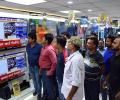
Nearly all FMCG companies like Marico, HUL, ITC and the rest have been indicating that the operating environment has been challenging, with drop in consumption, especially in rural areas, severe crunch in market liquidity conditions, and disruptions and floods in several parts of the country. To overcome this, they are boosting their direct reach in the countryside.

The number of people, the average age and the smartness of the people, willingness to work hard and the fundamental culture of working, will work in our favour, said Kal Raman, CEO of Solutionstar, in an interview to Shobha Warrier/Rediff.com.

After being cornered by Patanjali and macro-headwinds, ayurveda major Dabur is pulling up its socks. With better sales and improved margins, the firm is now looking to leverage the renewed popularity of ayurveda, mostly ignited by rival Patanjali. Sunil Duggal, bottom, left, chief executive officer, Dabur India, shares his plans and insights with Arnab Dutta.

Don't hit the buy button as soon as you hear of the next BIG online sale this Diwali. Here are some very important lessons -- in the light of how some online shoppers felt cheated after Flipkart's 'Billion Day Sale' -- that could save you time, money and peace of mind, says Rajiv Raj!

Unlike last year, investors turn cautious on e-commerce sector.

With $120 billion worth of deals, 2018 was the best year on record. Many also blame frequent policy flip-flops and increasing tax scrutiny as big dampners for business.

It's not e-retailers alone. Bankers are also celebrating initiatives like 'Big Billion Day Sale' this festive season.

Fuelled by the sustained growth of the online travel industry, the Indian e-commerce market will gallop at an impressive growth rate of 47 per cent to over Rs 46,000 crore (Rs 460 billion) in the 2011 calendar year, a report said.

'It is important that students not focus on the remuneration that the job fetches in the first year, but look at the next 5 year journey with that job role.'

Flipkart eyes another $500 mn from eBay, which seeks to merge India ops with it and exit business

'A fresh look is being given to ways of processing, transmission, and delivery.'
